




A groundbreaking international study demonstrated that a three-year exercise program not only improved survival in colon cancer patients but also helped keep the disease from returning. This first-of-its-kind experiment showed promising results, with benefits comparable to some cancer drugs.
Experts are now advocating for exercise coaching to be considered a new standard of care for colon cancer survivors. Until such an integration becomes widespread, cancer patients are encouraged to increase their physical activity after treatment, as it can significantly contribute to preventing cancer recurrence.
“It’s an extremely exciting study,” said Dr. Jeffrey Meyerhardt of Dana-Farber Cancer Institute, who wasn’t involved in the research. “It’s the first randomized controlled trial to show a reduction in cancer recurrences and improved survival linked to exercise,” Meyerhardt said.
Unlike previous studies, which only compared active and sedentary individuals, the new research—conducted across multiple countries including Canada, Australia, the United Kingdom, Israel, and the United States—randomly selected participants for an exercise program, with some receiving an educational booklet as a control.
“This is about as high a quality of evidence as you can get,” said Dr. Julie Gralow, chief medical officer of the American Society of Clinical Oncology. “I love this study because it’s something I’ve been promoting but with less strong evidence for a long time.”
The findings were shared at ASCO’s annual meeting in Chicago and were published in the New England Journal of Medicine. The study was funded by academic research groups in Canada, Australia, and the U.K.
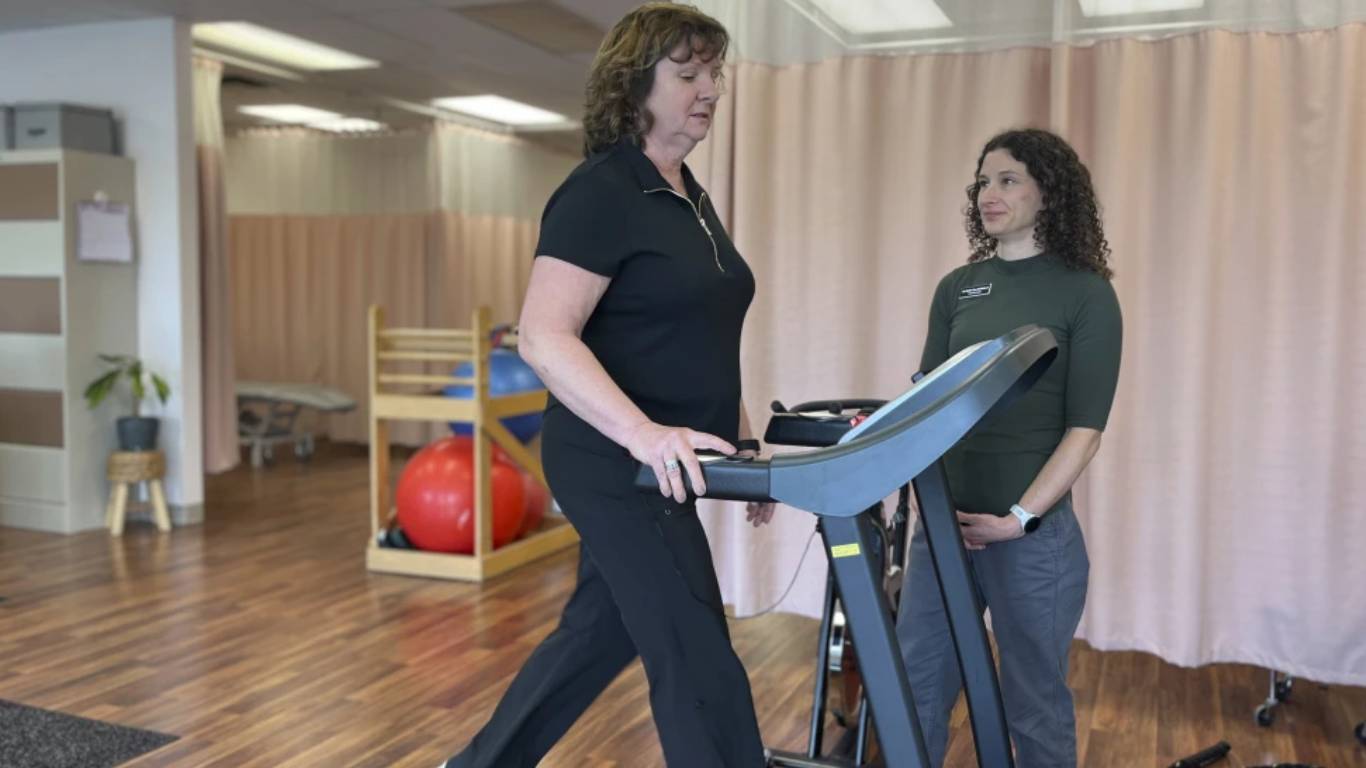
Researchers followed 889 patients with treatable colon cancer who had completed chemotherapy. One group received fitness and nutrition information, while the other participated in an exercise program with the help of a coach. These patients met with their coaches every two weeks for a year, and monthly thereafter for the next two years.
Coaches assisted participants in finding ways to increase their physical activity. Many, like Terri Swain-Collins, chose to walk for around 45 minutes multiple times a week.
“This is something I could do for myself to make me feel better,” said Swain-Collins, 62, of Kingston, Ontario. Regular contact with a friendly coach kept her motivated and accountable, she said. “I wouldn’t want to go there and say, ‘I didn’t do anything,’ so I was always doing stuff and making sure I got it done.”
After eight years, participants in the exercise program had 28% fewer cancer recurrences and 37% fewer deaths from any cause compared to those in the control group. Though there were more muscle strains and related problems in the exercise group, the overall benefits were clear.
“When we saw the results, we were just astounded,” said study co-author Dr. Christopher Booth, a cancer doctor at Kingston Health Sciences Centre in Kingston, Ontario.
Booth noted that exercise programs can be offered for several thousand dollars per patient, which is “a remarkably affordable intervention that will make people feel better, have fewer cancer recurrences and help them live longer.”
Researchers also collected blood samples from participants and plan to explore how exercise may play a role in cancer prevention, possibly through mechanisms like insulin processing or immune system enhancement.
Although Swain-Collins’ coaching program ended, she continues to exercise. She enjoys listening to music while walking in the countryside near her home.
Such behavior changes are achievable when individuals understand the benefits, make the activity enjoyable, and have a social support system, according to co-author Kerry Courneya from the University of Alberta. The new findings provide cancer patients with a strong incentive to remain motivated.
“Now we can say definitively exercise causes improvements in survival,” Courneya said.
Source: The Associated Press